LLMs in Triadic Supply Chain Management — AI as a Forecasting and Emission Integrator
Modern supply chains increasingly rely on triadic collaboration structures — relationships simultaneously involving a shipper (manufacturer), a 3PL logistics operator, and a recipient (customer). Unlike traditional bilateral relationships, triads require multilateral coordination grounded in trust, data transparency, and shared responsibility for the efficiency of the entire chain. The 3PL operator ceases to be merely an executor and becomes the central link integrating material and information flows between partners.
Research by Mariusz Kmiecik (Silesian University of Technology), published in Information Sciences (DOI: 10.1016/j.ins.2026.123084), is the first to combine two dimensions typically analysed in isolation: forecast accuracy generated by the 3PL operator and greenhouse gas emission data from transport activities — and subject both to analysis using a large language model.
Theoretical Framework
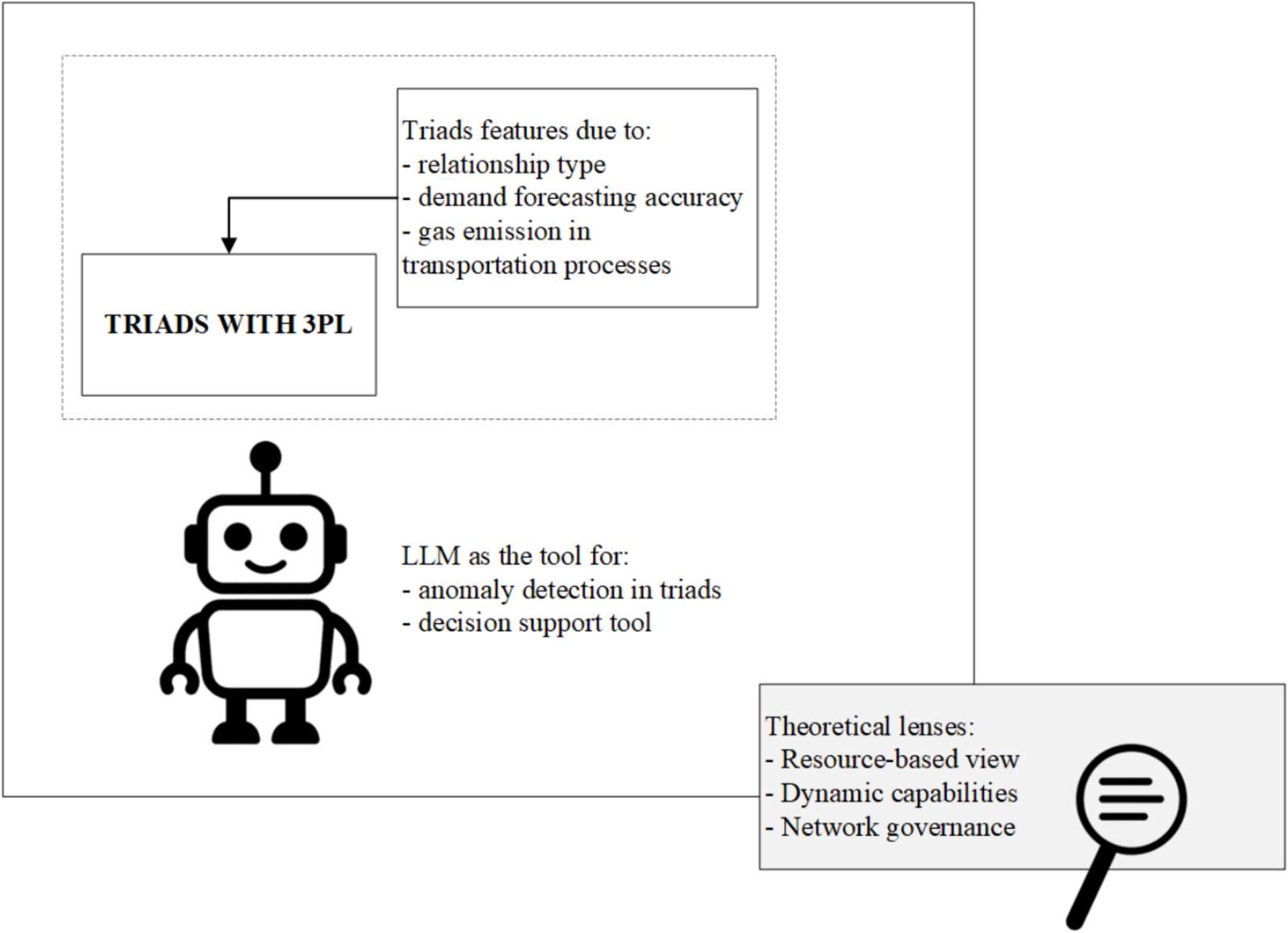
The study is grounded in three complementary theoretical perspectives used to interpret its findings:
- Resource-Based View (RBV) — LLMs as a strategic organisational resource capable of processing data and generating analytical advantages that are difficult for competitors to imitate.
- Dynamic Capabilities (DC) — the capacity for sensing (identifying anomalies), seizing (acting rapidly on data insights), and reconfiguring (transforming the triadic collaboration model).
- Network Governance — LLMs as a mechanism reinforcing both formal (KPIs, contracts, audits) and informal (trust, transparency) aspects of network management.
Data and Methodology
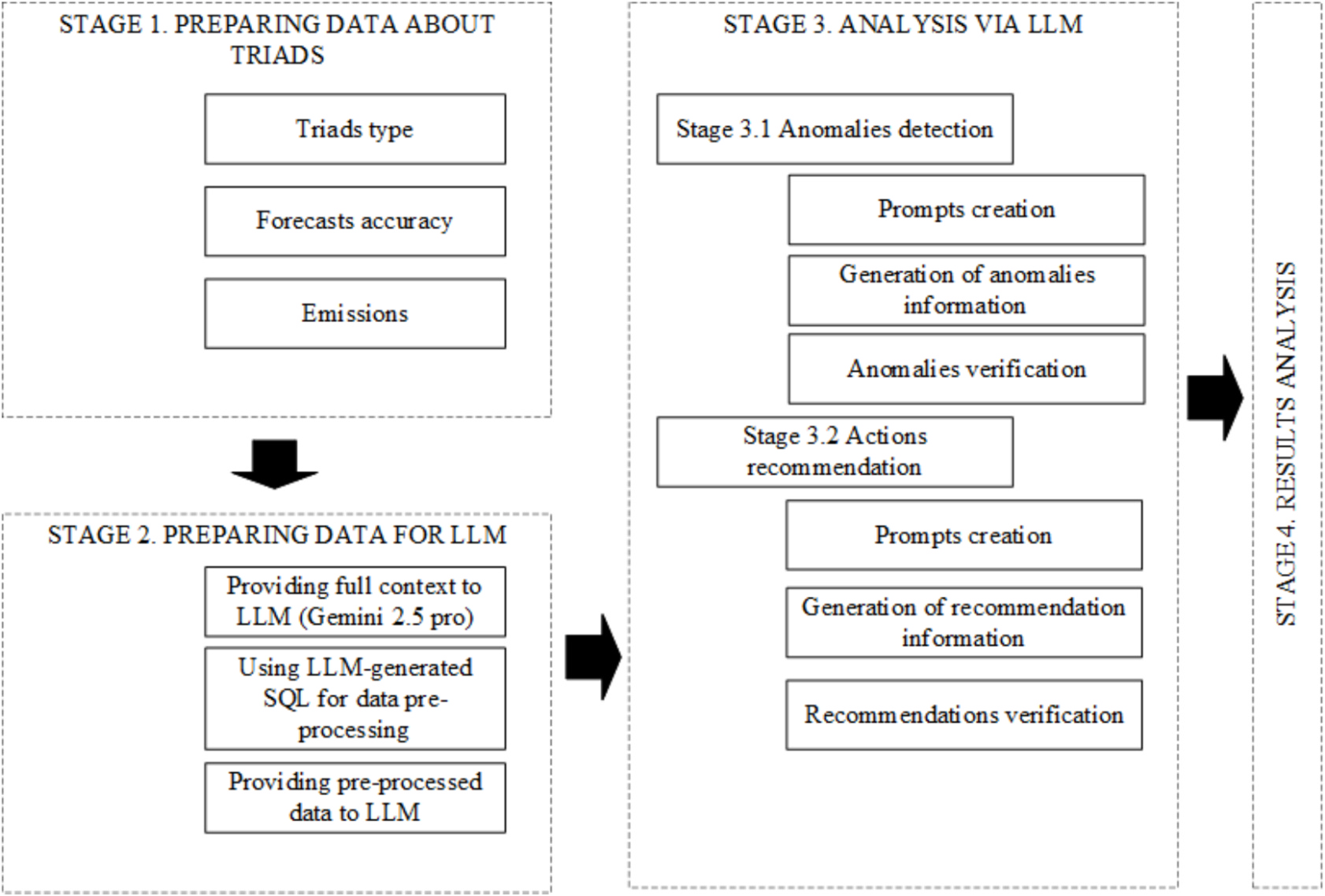
The study analysed 22 triads serviced by a single 3PL operator over three months. Source data covered completed road transport routes, cargo characteristics (weight, floor pallets), loading and unloading locations, and emission data for each route: CO₂, CO₂e, NOx, NMHC, and SOx. The raw transactional dataset comprised over 1.7 million daily records.
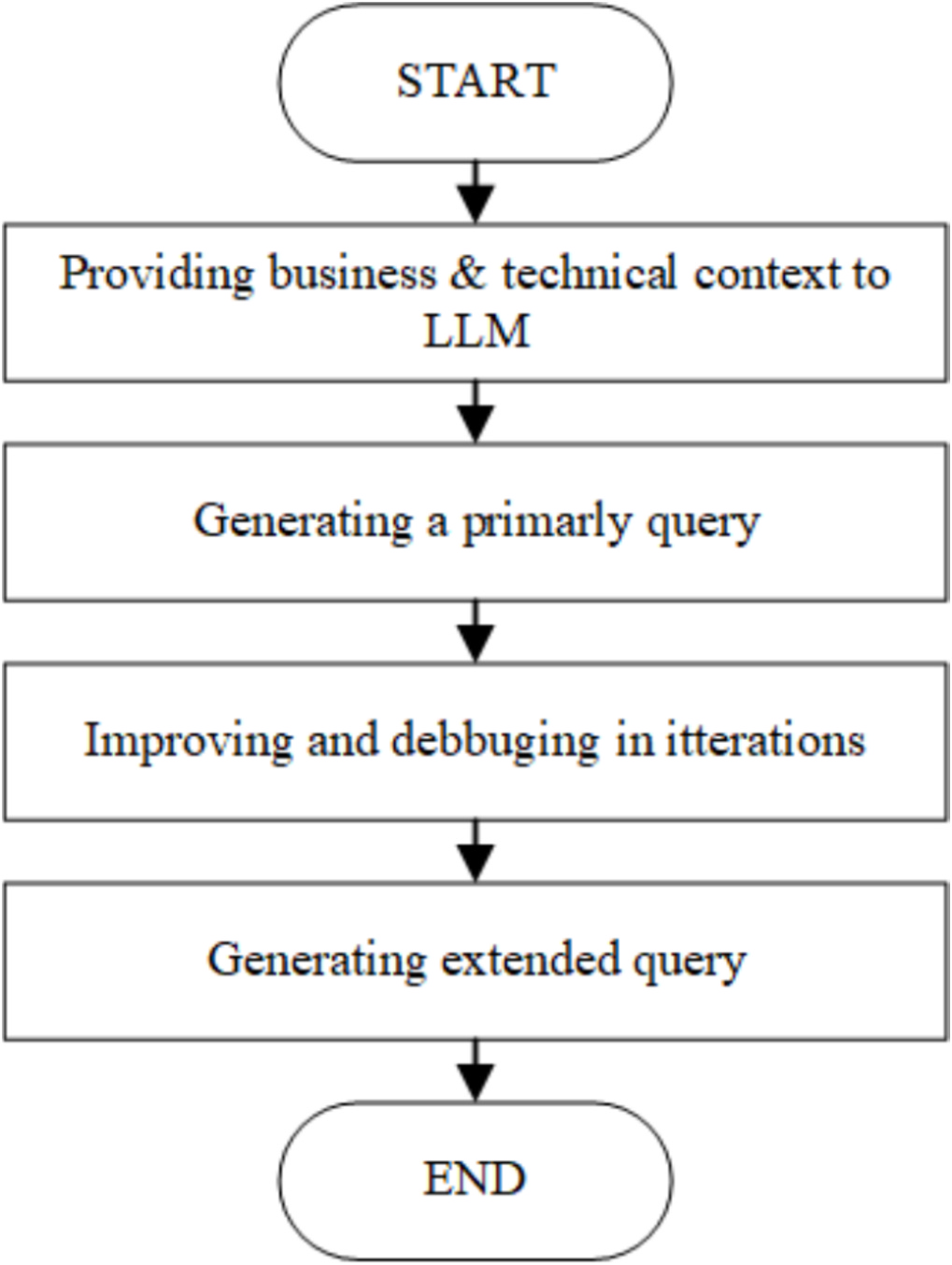
Due to the context window limitations of language models, data was processed in two stages. In the first stage, Gemini 2.5 Pro (selected for its largest context window of approximately 1 million tokens and low hallucination rate) interactively generated SQL queries to aggregate data to 22 rows — one per triad. In the second stage, the aggregated data was subjected to proper qualitative analysis.
Triads were classified along three structural dimensions: open/closed (presence of direct relationships among all participants), derived/concentred (degree of the 3PL operator's strategic involvement), and transitive/intransitive (direct relationship between sender and receiver).
Triad Types and Forecast Accuracy
The vast majority of the sample consisted of closed triads (n = 19) and concentred triads (n = 17). Analysis of forecast accuracy, measured by average MAPE over the three-month period, revealed significant variation: 5 triads achieved excellent accuracy (MAPE > 97%), 7 good (MAPE > 94%), 4 average (MAPE > 90%), and 6 poor.
The results reveal a clear pattern: closed and concentred triads were associated with significantly higher forecast quality compared to open and derived ones. Four of the five triads with excellent accuracy belonged to the closed group, and none of the open triads fell into the poor accuracy category. A similar pattern emerged for the derived/concentred dimension: three of five excellent and six of seven good accuracy cases were concentred triads.
Transport Emission Analysis
Among the five emission categories analysed, nitrogen oxides (NOx) exhibited the highest absolute values and greatest variation across triads — particularly in triads 2, 6, and 21. This is consistent with freight transport emission research: NOx is far more sensitive to engine technology, driving conditions, and exhaust after-treatment systems than CO₂.
For in-depth analysis, normalised emissions were calculated across four reference units: floor pallet, metric tonne of cargo, kilometre, and delivery. This approach enabled identification of emission-efficient triads regardless of operational scale — and distinguished them from triads with genuine environmental issues.
LLM for Anomaly Detection
In the first stage of the actual LLM analysis, Gemini processed the aggregated triad data and identified several key operational anomalies. The most significant included:
- Triad 2 (open, concentred, intransitive, excellent forecast accuracy) — identified as the primary emission anomaly. Despite high forecast quality, this triad generated disproportionately high NOx/km emissions. The LLM indicated that the open structure may hinder route optimisation and load consolidation.
- Triad 5 (closed, derived, transitive, poor forecast accuracy) — the LLM detected a combination of low forecast quality and high emissions, recommending priority structural transformation.
- Triad 9 (closed, concentred) — extreme delivery irregularity (index 4.45), which the LLM described as "an anomaly in itself," particularly surprising for a concentred triad.
A significant finding of the LLM analysis was the absence of a strong correlation between forecast quality and emission efficiency. The model explicitly concluded: "Other factors — such as operational scale, transport type, route efficiency, load consolidation policy, or client/route specifics — have a greater impact on emissions and delivery regularity than forecast accuracy alone."
Strategic Recommendations from the LLM
In response to the research question on the LLM's ability to generate strategic recommendations, the model produced an integrated set of actions for triads characterised by both high emissions and poor forecast quality. Key directions included:
- Transforming from derived to concentred collaboration — the LLM "strongly" recommended this change for triads 5 and 6, citing the potential for deeper informational integration, shared goals and KPIs, and building trust between partners.
- Implementing shared analytical platforms and LLM as a permanent tool — the model identified the need for common communication and data analysis systems, positioning LLMs simultaneously as an analytical tool and a component of the target management system.
- Operational optimisation — load consolidation, increased delivery frequency, dynamic route planning. These recommendations strengthen seizing and reconfiguring capabilities within the Dynamic Capabilities framework.
- Integration of environmental goals — the LLM proposed shared emission KPIs as an element reinforcing cooperation and building the 3PL operator's credibility with partners.
Expert Validation and Benchmark
All anomaly diagnoses and strategic recommendations generated by the LLM were evaluated by a panel of eight experts representing diverse perspectives: operational, strategic, analytical, client-side, and advisory. Assessment was conducted using a Likert scale (1–5).
The average score across all 27 assessed aspects was 4.46/5, indicating high agreement and practical utility of the model's outputs. The highest scores (average 5.0) were awarded to recommendations for fundamental structural and operational changes. The lowest-rated proposal (3.6) concerned transforming Triad 2 from open to closed — experts agreed with the diagnosis but questioned the practical feasibility of the change.
Reliability analysis (ICC(2,k) = 0.674, p < 0.001) confirmed good panel agreement. Benchmarking against the classical Isolation Forest algorithm pointed to the same problematic triads as the LLM, while the LLM provided substantially richer qualitative insights: it not only flagged quantitative anomalies but contextualised them within the strategic and operational framework of each triad.
Four Takeaways for Supply Chain Managers
- Triad structure matters for forecast quality. Closed and concentred triads consistently achieve better forecast accuracy. This is a practical argument for investing in deeper integration with your 3PL operator — not just at the operational level, but strategically.
- Good forecasts do not guarantee low emissions. Forecast accuracy and emission efficiency are separate management dimensions. Supply chain managers must address them in parallel — and measure them independently.
- LLMs as diagnostic tools go beyond quantitative algorithms. A language model does not merely identify statistical anomalies; it interprets them in the context of relationship structures, operational scale, and governance — something classical algorithms cannot do.
- Expert validation is essential. LLMs operate as "black boxes" — their recommendations require verification by people with contextual operational knowledge. The tool is an analytical assistant, not an autonomous decision-making system.
Kmiecik M. (2026). Integrating third-party logistics (3PL), forecast accuracy and emission management in triadic supply chains − a large language model-based approach. Information Sciences, 735, 123084.
DOI: 10.1016/j.ins.2026.123084