Generative AI in Intermodal Route Optimisation — 3PL Applications and Theoretical Insights
Intermodal transport — combining rail, road, sea and air — is the backbone of global supply chains, yet it remains one of the most complex areas to optimise. Route planning must simultaneously account for schedules, terminal availability, infrastructure constraints and dynamic disruptions: weather, regulatory changes, and geopolitical threats.
A paper by Mariusz Kmiecik (Silesian University of Technology), published in the Scientific Papers of Silesian University of Technology (DOI: 10.29119/1641-3466.2025.237.13), addresses a practical question: can large language models (LLMs) — specifically GPT-4o and Gemini Advanced — meaningfully support intermodal route planning by 3PL operators? And which performs better under real-world constraints?
Methodology — experimental dual-model validation
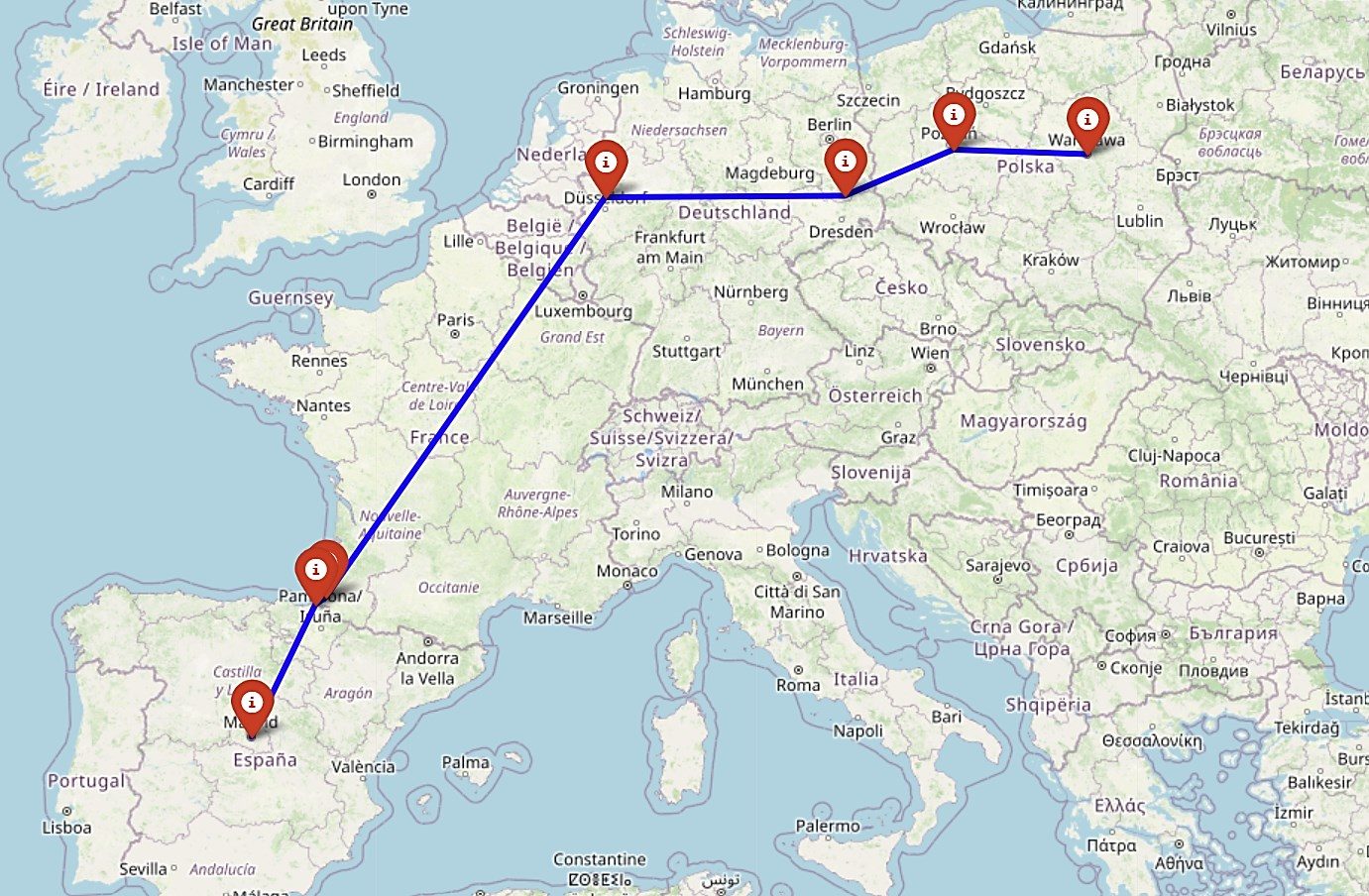
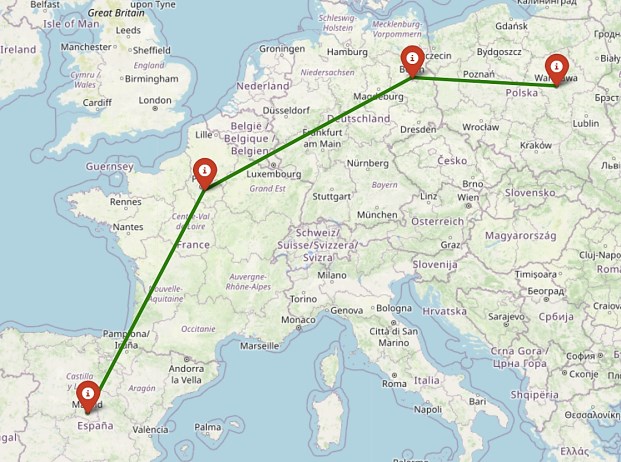
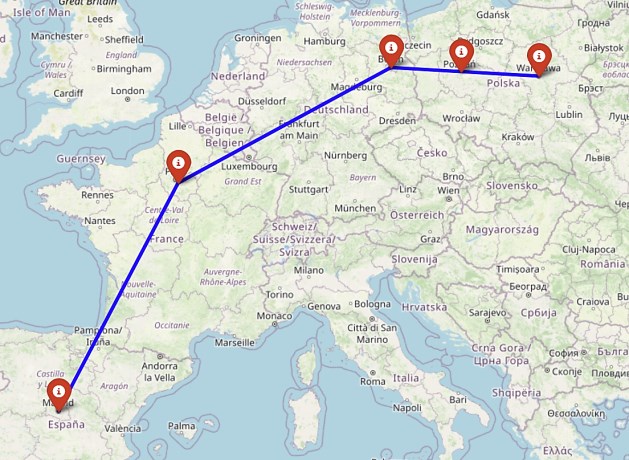
The study used an experimental approach: both generative models were loaded with data on real intermodal terminals and rail connections across Europe, then asked to plan routes between Warsaw (Poland) and Madrid (Spain) under two different optimisation criteria:
- Minimise the number of transshipments — critical for reducing operational costs and improving logistics efficiency,
- Minimise total distance — aimed at reducing transport time and CO₂ emissions.
The key methodological innovation was the synergistic use of both models: each LLM not only generated its own solutions but also evaluated and refined the outputs of the other model. This arrangement enabled cross-validation and systematic identification of each approach's weaknesses.
Results — GPT-4o versus Gemini Advanced
GPT-4o generated routes based on precise geodesic distance calculations and real terminal data, producing operationally viable proposals. Gemini Advanced optimised at the city level, which simplified the analysis but occasionally suggested connections that did not exist in the actual intermodal network.
The cross-validation assessment revealed that Gemini Advanced accepted GPT-4o's solution as superior, acknowledging that its own optimisation approach required refinement. GPT-4o, in turn, conducted a more nuanced comparative analysis — identifying the strengths and weaknesses of both models and proposing improvements to the decision-making process.
Three key limitations — what LLMs still cannot do
- No real-time operational data integration. The models operate on provided datasets — they cannot dynamically account for schedule changes or terminal closures. Every change requires the model to be manually re-fed with updated data.
- Results require validation. Some routes proposed by the models (particularly Gemini Advanced) were operationally infeasible due to absent transport connections. LLM outputs cannot be used without verification by an expert or a transport management system (TMS).
- The black-box problem. AI generates solutions without explaining which factors drove a specific decision. In environments requiring full auditability — pharmaceutical logistics, dangerous goods transport — this is a material limitation.
Practical implications for 3PL operators
The study's findings have concrete implications for contract logistics operators:
- Dynamic route adaptation: LLM-based systems can adjust transport routes to changing conditions, reducing delivery times and the number of transshipments — provided they are integrated with current operational data.
- Management decision support: LLMs can analyse scenarios and recommend optimal routes, flagging potential risks such as delays at congested terminals.
- Transport planning automation: AI models can complement classical optimisation algorithms by delivering near-real-time analytical insight.
The authors emphasise that implementing these technologies must always be accompanied by robust validation mechanisms. GPT-4o and Gemini Advanced are decision-support tools — not autonomous transport management systems.
Kmiecik M. (2025). Integrating Generative AI into Intermodal Route Optimization – 3PL Application and Theoretical Insights. Scientific Papers of Silesian University of Technology, Organization and Management Series No. 237.
DOI: 10.29119/1641-3466.2025.237.13