ChatGPT in Third-Party Logistics — Game-Changer or a Step into the Unknown?
The contract logistics (3PL) market is moving rapidly towards automation and digitalisation — and since 2023, ChatGPT has been one of the most frequently discussed tools in this context. This is not marketing hype: the question is a concrete one. Can a large language model substitute for, or meaningfully complement, the specialised analytical systems used by logistics operators?
A paper by Mariusz Kmiecik (Silesian University of Technology), published in the Journal of Open Innovation: Technology, Market, and Complexity (DOI: 10.1016/j.joitmc.2023.100174), addresses precisely this question — not through speculation, but through empirical verification using real operational data from an active 3PL operator.
Research methodology
The study combined two approaches: a survey of fifteen expert logistics managers (minimum five years in a managerial role within 3PL operations) and a case study based on data from an international contract logistics operator. The operator provides warehousing, transport and distribution services to clients in the food, cosmetics, pharmaceutical and chemical sectors.
The study deliberately used the free (open-source) version of ChatGPT for most tasks, reserving the paid GPT-3.5 version for numerical forecasting. This methodological choice allowed the researchers to assess the capabilities of the tool as it is accessible to any company without additional costs — while also identifying where that accessibility ends.
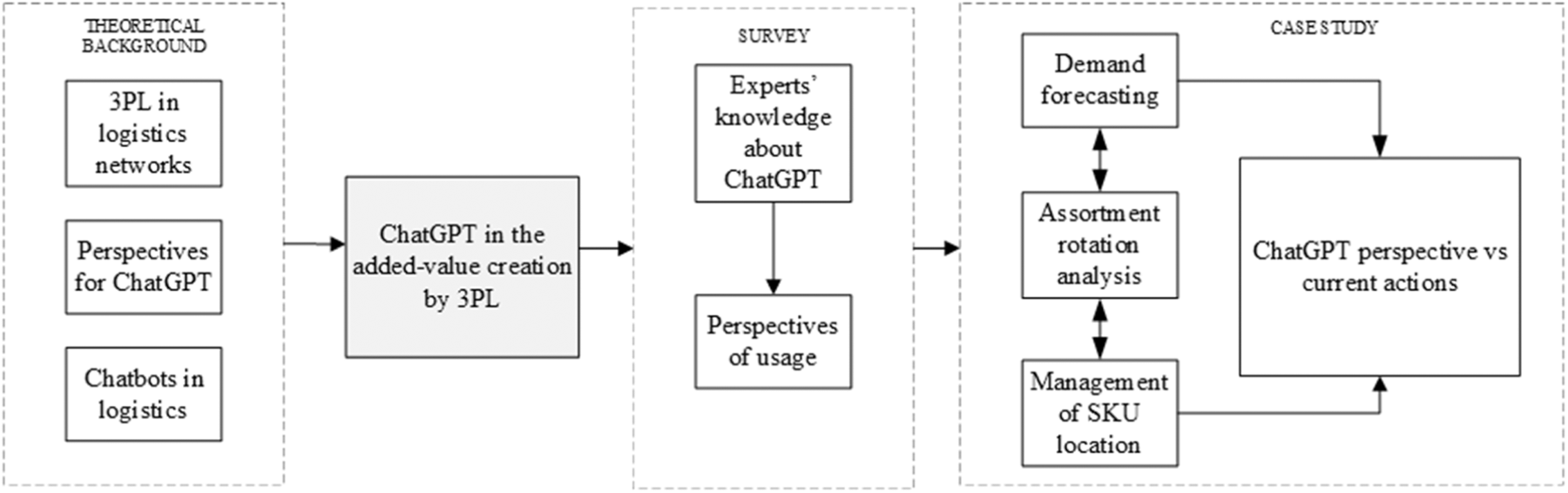
What do 3PL managers know and think?
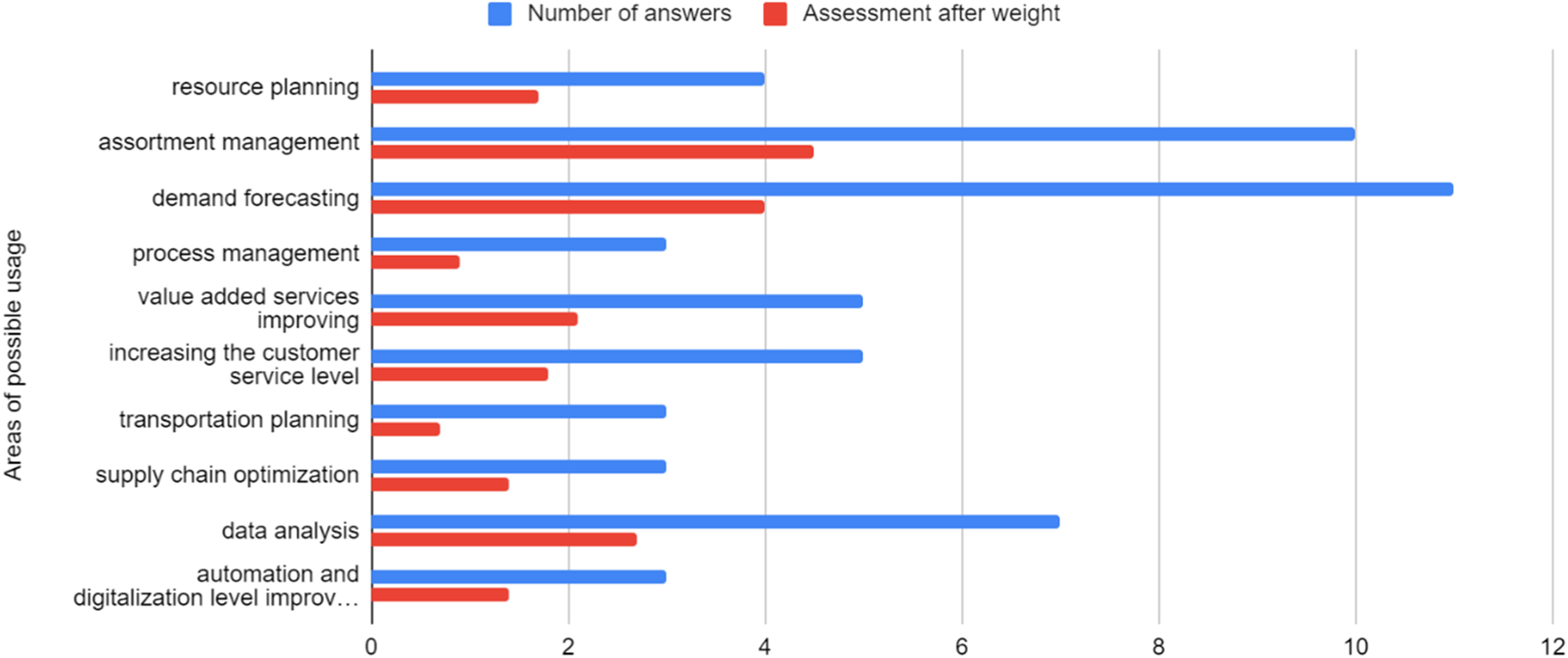
The survey results are unambiguous: all fifteen experts confirmed that ChatGPT can support logistics operator activities — even with varied levels of familiarity with the tool. 40% use it frequently, 40% use it occasionally, and 20% had only heard of it.
The weighted assessment of application areas identified two clear frontrunners: assortment management and demand forecasting — both directly related to the core functions of a 3PL operator within the distribution network.
Demand forecasting — ChatGPT versus modified ARIMA
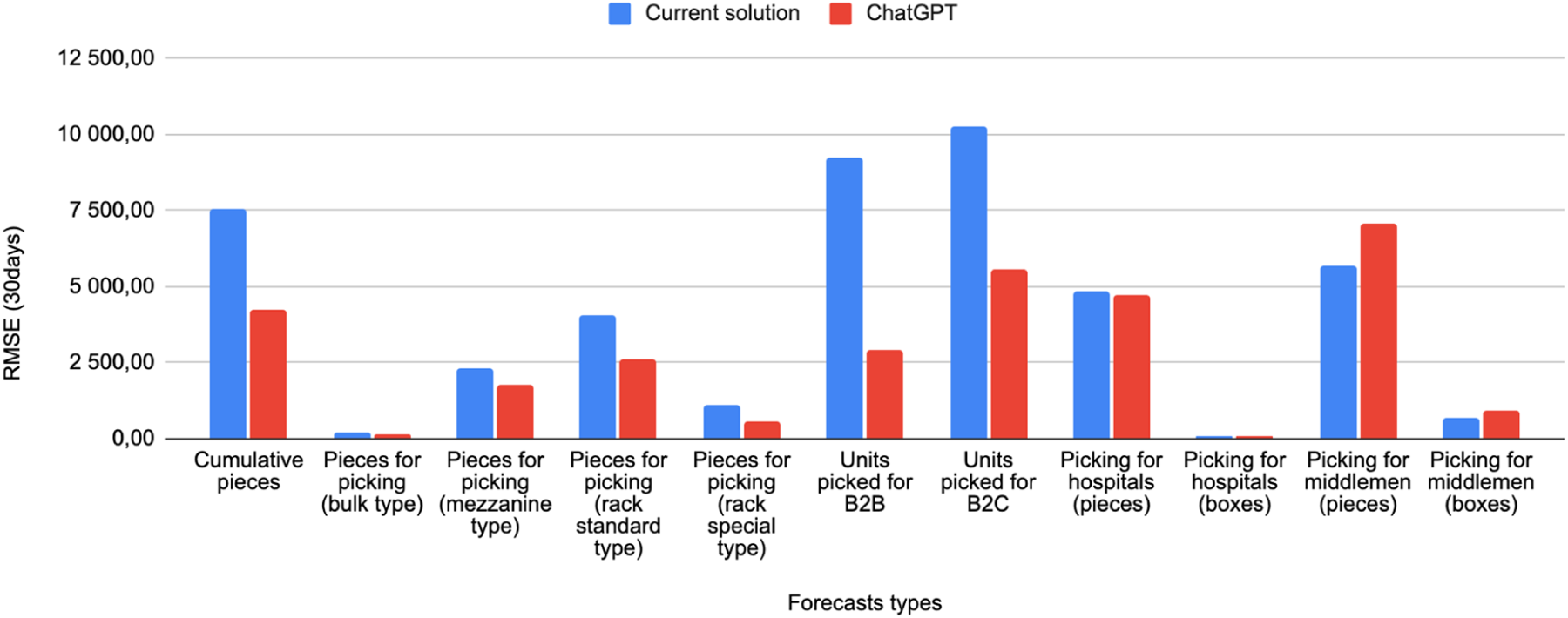
The case study compared ChatGPT-generated forecasts with those produced by the operator's current system, based on a modified ARIMA algorithm. The comparison covered a 30-day forecasting horizon across three service recipient categories: a pharmaceutical and cosmetics manufacturer, a non-food producer (e-commerce), and a multichannel distributor.
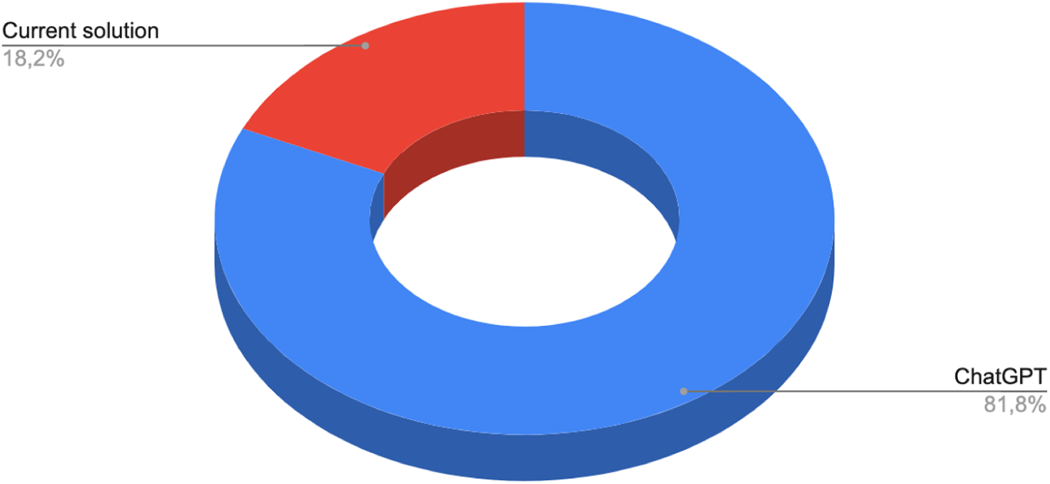
The results are striking: ChatGPT achieved lower RMSE in 81.8% of measured cases and generated a more accurate daily forecast in 67.3% of observations. It performed notably better precisely in the cases where the current ARIMA solution struggled most — which is exactly where algorithmic support is most valuable.
One important caveat: the free version of ChatGPT does not have native time-series forecasting capabilities. The paid GPT-3.5 version was required for this task, which means integrating ChatGPT into 3PL forecasting processes is not cost-free — and requires a considered decision about subscription costs and integration effort.
Assortment management and SKU location
Beyond forecasting, the study tested ChatGPT on two further tasks: ABC classification of the product assortment (using a modified sub-division of the 'A' category) and optimal warehouse location assignment for a client with a large, diverse assortment operating across both traditional and e-commerce channels.
In both cases, ChatGPT was capable of generating useful operational recommendations — however, it clearly fell short of specialist solutions where precise integration with real WMS data was required. The tool works best as an expert's decision-support instrument, not as an autonomous operational system.
Four conclusions for the 3PL manager
- ChatGPT is a decision-support tool, not a WMS replacement. Its value emerges where rapid option generation, qualitative analysis or preliminary classification is needed — not where real-time integration with live operational data is required.
- Numerical forecasting requires the paid version. The free version performs well for descriptive analysis and documentation. Time-series forecasting requires GPT-3.5 or higher — which implies subscription costs and an integration decision.
- Output quality depends on input quality. ChatGPT operates on data provided by the user. Absent or poor-quality data produces poor-quality results — the classic garbage-in, garbage-out effect.
- Current integration with enterprise systems remains a challenge. The model operates as a "black box" — it does not explain the reasoning behind specific forecasts. In auditability-sensitive environments (pharmaceuticals, food logistics) this is a significant limitation.
Kmiecik M. (2023). ChatGPT in third-party logistics – The game-changer or a step into the unknown? Journal of Open Innovation: Technology, Market, and Complexity, 9(2023), 100174.
DOI: 10.1016/j.joitmc.2023.100174